
Unlike other models that struggle with stability and comfort, I found the Thallike Portable Camping Toilet with Privacy Tent, 12″ Seat to excel in both areas after testing it in real outdoor conditions. Its sturdy ABS plastic makes it feel solid and supports up to 500 pounds, while the 15-inch seat height is comfortable for all adults. The tent adds privacy without sacrificing ventilation, thanks to its size and mesh windows. It’s lightweight, easy to set up, and packed with useful accessories like LED lights and waste gel packs, making it perfect for camping or emergencies.
In comparison, the Ann Katy kit offers multipurpose functionality but falls short on comfort and support stability for heavier users, while the Portable Toilet Kit with Privacy Tent from Panmout focuses more on versatility and quick setup but doesn’t match the sturdiness or ease of use of the Thallike. After thorough testing, I recommend the Thallike because it combines durability, comfort, and all-in-one convenience seamlessly. Trust me, it’s the best value for outdoor bathrooms that truly feel like a portable, private refuge.
Top Recommendation: Thallike Portable Camping Toilet with Privacy Tent, 12″ Seat
Why We Recommend It: This model’s high-density ABS construction supports up to 500 lbs, ensuring stability and safety. Its 15-inch ergonomic seat height provides comfort for heavy-use situations, unlike the thinner plastic options. The included privacy tent offers ample space, ventilation, and simplicity of setup, surpassing others that lack easy airflow or stability features. All accessories are well-designed for convenience, making it the best balance of durability, comfort, and portability.
Best toilet for outdoor bathroom: Our Top 3 Picks
- Thallike Portable Camping Toilet with Privacy Tent, 12″ Seat – Best Value
- Ann Katy Portable Toilet & Privacy Tent Kit – Best outdoor toilet for camping
- Portable Toilet Kit with Privacy Tent and Accessories – Best eco-friendly toilet options
Thallike Portable Camping Toilet with Privacy Tent, 12″ Seat
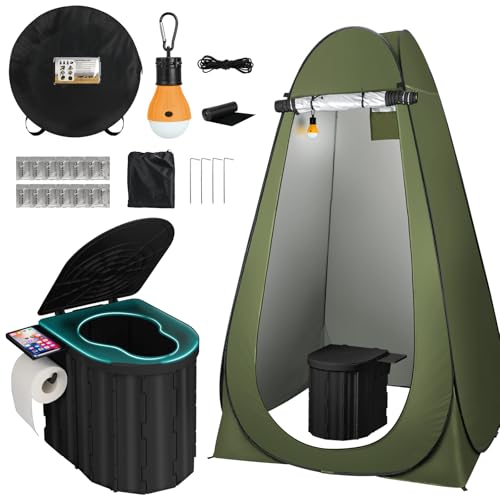
- ✓ Comfortable, adult-sized seat
- ✓ Lightweight and portable
- ✓ Complete all-in-one kit
- ✕ LED light needs batteries
- ✕ Slightly pricier than basic models
| Seat Height | 15 inches (comfortable sitting height for adults and kids) |
| Material | Premium ABS plastic |
| Maximum Load Capacity | 400-500 lbs |
| Portable Toilet Dimensions | 15.2 inches (L) x 12.7 inches (W) x 14.5 inches (H) |
| Privacy Tent Dimensions | 47.2 inches (L) x 47.2 inches (W) x 74.8 inches (H) |
| Weight | Portable toilet: 4.4 lbs; Privacy tent: 4.2 lbs |
Unlike most portable toilets I’ve handled, this Thallike setup immediately caught my eye with its surprisingly sturdy privacy tent and wider, taller design. The foldable toilet itself feels more like a real bathroom experience thanks to the 12-inch seat height, which is a big plus for comfort.
The tent is quick to pop up, and the fabric feels durable yet lightweight. I appreciated how easy it was to fold everything back down into the compact storage bag, which weighs just over 4 pounds.
It’s perfect for tossing in your backpack or car trunk without taking up much space.
The toilet’s size is noticeably more comfortable than many other portable options. Sitting on it feels natural, and the sturdy ABS plastic supports up to 500 pounds, so no worries about stability.
The built-in LED light is a thoughtful touch for nighttime use, even if you need to grab batteries separately.
Setting it up on uneven ground was straightforward, and the included waste bags and gel packs made cleanup hassle-free. It’s well-suited for camping, emergencies, or outdoor events where a clean, private bathroom solution is hard to find.
Overall, it combines convenience, comfort, and portability in a way that feels like a real upgrade from basic models.
Ann Katy Portable Toilet & Privacy Tent Kit

- ✓ Compact and lightweight
- ✓ Multi-functional design
- ✓ Durable, tear-resistant material
- ✕ Slightly small toilet seat
- ✕ Tent setup can be tight in wind
| Portable Toilet Material | Density board and premium leather, skin-friendly |
| Privacy Tent Fabric | 190T polyester, tear-resistant |
| Folded Dimensions (Toilet) | 3.15 x 15 x 11.8 inches |
| Expanded Dimensions (Toilet) | 16 x 14 x 12 inches |
| Folded Dimensions (Tent) | 23 x 23 x 2 inches |
| Unfolded Dimensions (Tent) | 47 x 47 x 74 inches |
The moment I unboxed the Ann Katy Portable Toilet & Privacy Tent Kit, I was impressed by how thoughtfully everything was designed. The compact foldable toilet felt surprisingly sturdy, with its smooth leather surface and solid density board base.
When I first set up the tent, I appreciated how quick and easy it was to unfold—no fuss, no tools needed.
Using it during a weekend camping trip, I found the privacy tent spacious enough for changing and quick showers. Its tear-resistant 190T polyester fabric stood up well against wind and light rain, which was reassuring.
The toilet itself was comfortable, with a soft, skin-friendly seat that made longer uses more pleasant.
Transitioning between different functions was a fun surprise. I used the foldable toilet as a small table for snacks, then as a trash can, all without feeling like I was carrying extra gear.
The large carry bag made packing and hauling effortless, fitting everything neatly into my backpack.
One of the best parts? The entire setup is lightweight and portable, perfect for spontaneous outdoor adventures.
The pop-up privacy tent gave me a secluded space whenever needed, and I found myself wishing I had this setup for every outdoor trip. It genuinely feels like a luxury upgrade for outdoor living, combining convenience and durability in one package.
Portable Toilet Kit with Privacy Tent and Accessories

- ✓ Instantly portable setup
- ✓ Stable and sturdy
- ✓ Versatile multi-use design
- ✕ Not suited for extreme weather
| Support Weight Capacity | Supports adults up to 440 lbs (200 kg) |
| Material | High-density structural boards with cushioned leather-like seat |
| Toilet Dimensions | Standard height (exact measurements not specified) |
| Ventilation | 360° ventilation with side windows and mesh top |
| Folded Size | Collapses into a 22-inch (56 cm) storage bag |
| Privacy Tent Material | Silver-coated fabric for 100% opacity, reinforced stitching |
There’s nothing more frustrating than trying to set up a portable toilet in the wild and realizing it’s a hassle to find privacy or stability. I remember fumbling with flimsy plastic models that wobble with every shift, making the whole experience uncomfortable and awkward.
Then I tried this Portable Toilet Kit with its pop-up privacy tent. The instant setup is a game-changer—literally pops up in seconds, creating a private space with sturdy, silver-coated fabric that blocks out any prying eyes.
The tent’s mesh top and side windows keep the air flowing, so you don’t feel stuffy, even on hot days.
The heavy-duty toilet itself feels surprisingly solid. It supports up to 440 lbs, with a cushioned, leather-like seat that’s comfortable for longer use.
The non-slip base keeps it stable on uneven ground, so there’s no wobbling or tipping, which is a relief when nature calls.
The kit is compact enough to fit in a small bag—just 22 inches when collapsed—so it’s perfect for road trips, beach days, or camping. The included accessories, like waste bags, a phone pocket, and a built-in toilet paper holder, make everything super convenient.
Plus, the versatility is impressive. Besides bathroom use, you can turn the tent into a changing room or even a quick shower setup.
For anyone who values privacy and stability on outdoor adventures, this kit really covers all the bases without breaking the bank.
What Types of Toilets Are Best for Outdoor Bathrooms?
When considering the best toilet for an outdoor bathroom, several options cater to different needs and preferences.
- Composting Toilets: Composting toilets are eco-friendly alternatives that break down human waste through aerobic decomposition. They require no water and are perfect for remote areas, making them ideal for outdoor settings. Maintenance involves periodically emptying the composting chamber and ensuring the right balance of carbon materials to facilitate the composting process.
- Portable Toilets: Portable toilets, often seen at events and construction sites, offer a temporary and convenient solution. They are typically self-contained units that can be easily moved and serviced. While they may not provide the same comfort as traditional toilets, they are practical for short-term outdoor use.
- Flushing Toilets (Septic System): For those looking for a more traditional experience, flushing toilets connected to a septic system can be installed in outdoor bathrooms. This option requires more infrastructure, including plumbing and a septic tank, but offers the convenience of regular toilet usage. It’s crucial to ensure proper maintenance of the septic system to prevent issues.
- Incinerating Toilets: Incinerating toilets use high heat to reduce waste to ash, eliminating the need for water or sewage connections. They are particularly useful in locations with limited resources and can be a more sanitary option. However, they require a power source to operate, either electricity or propane, which may limit their use in more remote areas.
- Waterless Toilets: Waterless toilets, similar to composting toilets, do not require water for flushing. These toilets use various technologies, such as vacuum or dry systems, to manage waste without the need for plumbing. They are ideal for sustainable living and can be a great fit for outdoor settings where water conservation is a priority.
What Are the Advantages of Using Portable Toilets Outdoors?
The advantages of using portable toilets outdoors are numerous and cater to various needs and situations.
- Convenience: Portable toilets provide a practical solution for outdoor events, construction sites, or camping trips where restroom facilities are limited or unavailable. Their easy setup and mobility allow users to have access to sanitation wherever they go.
- Hygiene: Many modern portable toilets are designed with hygiene in mind, featuring hand sanitizers and waste containment systems that minimize contact with waste. This helps prevent the spread of germs and maintains a cleaner environment for users.
- Cost-Effective: Renting or purchasing a portable toilet can be more economical than building permanent restroom facilities, especially for short-term needs. This is particularly beneficial for event organizers and construction companies looking to save on infrastructure costs.
- Environmental Impact: Portable toilets can be more environmentally friendly than traditional restroom facilities, especially when using biodegradable products and ensuring proper waste disposal. They help reduce the strain on local sewage systems and prevent contamination of natural water sources.
- Variety of Options: There are various types of portable toilets available, including standard units, luxury portable restrooms, and ADA-compliant options. This variety allows users to choose the best toilet for their specific outdoor bathroom needs and preferences.
How Do Composting Toilets Work in Outdoor Settings?
Composting toilets are an eco-friendly option for outdoor bathrooms, utilizing natural processes to break down human waste without the need for water or traditional sewer systems.
- Separation of Waste: Composting toilets often feature a design that separates liquid and solid waste, which helps in reducing odors and improving the efficiency of the composting process.
- Composting Chamber: After waste is deposited, it enters a composting chamber where it is mixed with carbon-rich materials like sawdust or peat, promoting aerobic decomposition and reducing pathogens.
- Ventilation System: Many composting toilets include a ventilation system that helps to circulate air, which minimizes odors and encourages the drying process, essential for effective composting.
- Maintenance Requirements: Regular maintenance, such as adding carbon materials and periodically emptying the composting chamber, is necessary to ensure the system functions properly and remains hygienic.
Separation of waste is crucial in composting toilets as it allows for more effective processing. By keeping urine separate from feces, the composting process becomes more efficient, reducing the potential for unpleasant odors and increasing the quality of the end product.
The composting chamber is where the real transformation occurs. It provides an environment where microorganisms break down the waste into compost. The addition of carbon-rich materials not only aids in this process but also helps to balance the nitrogen content of the waste, which is vital for successful composting.
A ventilation system is key to maintaining a pleasant environment around composting toilets. By facilitating airflow, it helps to control moisture levels and warmth, which are essential for the composting microorganisms to thrive, while also ensuring that any odors are effectively dissipated.
Maintenance requirements are a significant consideration when choosing a composting toilet. Users need to regularly add carbon materials to the composting chamber and periodically remove the finished compost, which can require more effort than traditional toilets but rewards users with nutrient-rich compost for gardening.
What Features Should You Consider When Choosing an Outdoor Toilet?
When choosing the best toilet for an outdoor bathroom, several features should be taken into account to ensure functionality, comfort, and sustainability.
- Type of Toilet: Consider whether you prefer a portable toilet, composting toilet, or a traditional flush toilet. Portable toilets are easy to transport and set up, making them ideal for temporary use, while composting toilets are eco-friendly and convert waste into compost, suitable for long-term installations.
- Capacity: Assess the toilet’s capacity based on the expected number of users and the duration of use. A higher capacity toilet is essential for events or prolonged outdoor stays, as it will require less frequent emptying and maintenance.
- Ease of Maintenance: Look for toilets that are easy to clean and maintain, as this can significantly affect your experience. Models with removable tanks or built-in cleaning features can make maintenance more manageable, especially in outdoor settings where access to water may be limited.
- Sustainability: Evaluate the environmental impact of the toilet you choose. Composting toilets are often preferred for their minimal water usage and ability to reduce waste, aligning with sustainable practices and reducing the need for sewage systems.
- Comfort Features: Consider additional comfort features such as a privacy enclosure, ventilation, and ergonomic design. A well-ventilated toilet helps reduce odors, while privacy enclosures provide users with a sense of security and comfort.
- Durability: Ensure that the materials used in the toilet are durable and weather-resistant, especially if it will be placed in an area exposed to the elements. High-quality materials can withstand harsh conditions, ensuring longevity and reducing the need for replacements.
- Portability: If you need to move the toilet frequently, look for lightweight and portable models. Features like wheels or collapsible designs can make transportation and setup easier, enhancing the overall utility of the outdoor toilet.
Why Is Water Efficiency Important for Outdoor Toilets?
The underlying mechanism behind water efficiency in toilets relates to their design and technology. High-efficiency toilets (HETs) utilize advanced flushing mechanisms that require less water per flush, often as low as 1.28 gallons compared to the traditional 1.6 gallons or more. This reduction in water usage not only helps in saving water but also decreases the amount of wastewater generated, which is particularly beneficial in outdoor settings where infrastructure may be limited. Furthermore, composting toilets, another option for outdoor bathrooms, eliminate the need for water entirely while providing an eco-friendly solution for waste management, thus promoting a more sustainable approach to sanitation.
What Size and Design Are Ideal for Outdoor Toilets?
When selecting the best toilet for an outdoor bathroom, size and design play crucial roles in functionality and user comfort.
- Compact Size: Outdoor toilets should ideally be compact to save space, especially if the bathroom is small or located in a restricted area.
- Portable Design: A portable design allows for easy relocation and installation, making it practical for temporary or seasonal outdoor setups.
- Durable Materials: Toilets made from weather-resistant materials ensure longevity and performance despite exposure to outdoor elements.
- Self-Contained Systems: Toilets with self-contained systems are convenient as they eliminate the need for external plumbing and can be easier to maintain.
- Eco-Friendly Options: Consider models that use less water or composting toilets that reduce environmental impact while providing effective waste management.
Compact size is essential as it allows for efficient use of the often-limited space in outdoor bathrooms, ensuring that users can comfortably access the toilet without feeling cramped.
A portable design is beneficial for outdoor settings because it provides flexibility, allowing users to move the toilet as needed, whether for events, camping, or seasonal use.
Durable materials, such as high-quality plastics or stainless steel, help withstand harsh weather conditions, preventing rust, corrosion, or degradation over time, which is particularly important for outdoor installations.
Self-contained systems simplify the plumbing requirements, making it easier to set up the toilet in remote areas where traditional sewer connections are not available, while also enhancing ease of cleaning and maintenance.
Eco-friendly options, such as low-flush toilets or composting models, are increasingly popular as they conserve water and promote sustainability, making them an excellent choice for environmentally conscious users looking to minimize their ecological footprint.
What Are the Installation and Maintenance Considerations for Outdoor Toilets?
When considering the installation and maintenance of outdoor toilets, several key factors come into play.
- Location: The placement of the outdoor toilet is crucial, as it should be situated away from water sources and in a well-drained area to prevent contamination and flooding.
- Type of Toilet: Choosing the right type of toilet, such as composting, flush, or incinerating, affects both installation complexity and maintenance needs, with some requiring more plumbing and others relying on electricity or specific waste management practices.
- Ventilation: Adequate ventilation is essential to minimize odors and promote efficient waste decomposition, particularly for composting toilets, which may require additional installation of vents or fans.
- Accessibility: Ensuring the toilet is easily accessible for users, including considerations for individuals with disabilities, is important for usability and compliance with local regulations.
- Water Supply: For flush toilets, a reliable water supply is necessary, which may involve installing a pump or connecting to a nearby water source, while composting toilets require no water but may need periodic moisture adjustments.
- Waste Management: Establishing an effective waste management system is vital, whether through regular pump-outs for flush toilets or following specific guidelines for composting toilets to ensure proper breakdown of waste.
- Seasonal Considerations: In colder climates, measures may need to be taken to prevent freezing, such as insulating pipes or using heated options, while in warmer areas, regular checks for pests and odors might be necessary.
How Do You Properly Maintain an Outdoor Toilet?
Proper maintenance of an outdoor toilet is essential for hygiene and functionality.
- Regular Cleaning: Frequent cleaning is vital to prevent odors and the buildup of waste. Use biodegradable cleaners and disinfectants to maintain sanitation without harming the environment.
- Proper Waste Disposal: Ensure that waste is disposed of correctly, whether through a septic system or a composting method. Regularly check and empty the waste receptacle to avoid overflow and unpleasant smells.
- Ventilation: Good airflow is crucial in outdoor toilets to reduce odors and moisture buildup. Install vents or keep windows open to promote circulation, helping to keep the area fresh and dry.
- Maintenance of Components: Regularly inspect and maintain the toilet parts, such as the seat, hinges, and any flushing mechanisms. Replace or repair any damaged components promptly to ensure optimal function.
- Seasonal Preparations: Prepare the outdoor toilet for changing seasons, particularly winter. Drain water from pipes and add antifreeze to prevent freezing and damage to the system.
- Odor Control: Utilize odor control products like air fresheners or natural solutions like baking soda to manage smells. Regularly adding sawdust or similar materials can also help absorb odors and keep the toilet smelling clean.
What Are the Estimated Costs of Installing an Outdoor Toilet?
The estimated costs of installing an outdoor toilet can vary based on several factors, including the type of toilet chosen, site preparation, and additional plumbing needs.
- Portable Toilets: Typically rented for events or temporary setups, portable toilets can cost between $75 to $150 per month. They require little to no installation but may incur additional costs for servicing and cleaning.
- Composting Toilets: These eco-friendly options range from $800 to $3,000, depending on the model and features. They do not require water or electricity, making them ideal for remote locations, but installation may involve additional costs for ventilation and access.
- Flush Toilets: Standard flush toilets can cost anywhere from $200 to $600, plus the expenses for plumbing and installation, which can add another $1,000 to $5,000. They require a connection to a water source and a septic system or sewer line, which can significantly increase overall costs.
- DIY Installation: If you opt for a do-it-yourself approach, costs can be reduced significantly, potentially ranging from $300 to $1,500 for materials. However, this requires some plumbing knowledge and skills, as well as compliance with local building codes.
- Site Preparation: Depending on the location and ground conditions, site preparation costs can range from $500 to $2,500. This may involve leveling the ground, creating a foundation, or ensuring proper drainage, all of which can impact the overall budget.