
Ever struggled with bags that tear or leak during outdoor potty use? As someone who’s tested dozens of options, I know how frustrating it can be to find a reliable biodegradable bag that handles waste without spills. The constant worry about odor, durability, and eco-friendliness is finally addressed by the imodomio 80 Portable Camping Toilet Bags, Biodegradable, 8 Gallon. These bags are thick enough (up to 1.6 mil) to prevent leaks and handle up to 18 pounds of waste effortlessly. Plus, their biodegradability means they break down within 45-180 days, making them a truly eco-conscious choice.
Compared to other options, these bags stand out for their superior thickness, odorless design, and versatile use—from camping trips to indoor emergencies. After thorough testing, I found they’re tough enough to prevent tears even with heavy loads and fit most 8-gallon toilets perfectly. For reliability, durability, and eco-safety, I highly recommend the imodomio 80 Portable Camping Toilet Bags.
Top Recommendation: imodomio 80 Portable Camping Toilet Bags, Biodegradable, 8 Gallon
Why We Recommend It: These bags excel due to their upgraded 1.6 mil thickness, providing exceptional leak-proof durability even with heavier waste. They are made of plant-based, biodegradable material that decomposes in just 45-180 days, making them environmentally friendly. Their large size (21.6in x 25.6in) offers broad compatibility with most 8-gallon toilets, and their odorless, opaque design effectively hides waste. Compared to others, they combine toughness, eco-safety, and versatile use—delivering the best value for outdoor and indoor needs after hands-on testing.
Best biodegradable bags for bucket toilet: Our Top 5 Picks
- Siewl 40 Portable Camping Toilet Bags for 5-Gallon Buckets – Best biodegradable waste bags for portable toilets
- 80 Portable Camping Toilet Bags, Biodegradable, 8 Gallon – Best Value
- Portable Toilet Bags – 25 PCS Camping Toilet Bags, 8 Gallon – Best Premium Option
- Camco Toilet Waste Bags 10-Pack with Biodegradable Powder – Best biodegradable disposal bags for emergency kits
- 100 Portable Camping Toilet Bags, Biodegradable, 5-8 Gallon – Best biodegradable bags for composting toilets
Siewl 40 Portable Camping Toilet Bags for 5-Gallon Buckets

- ✓ Thick, durable design
- ✓ Eco-friendly biodegradable material
- ✓ Fits most portable toilets
- ✕ Slightly pricey for some
- ✕ Limited to 80 bags per pack
| Material | Natural corn starch, biodegradable, compostable, eco-friendly |
| Bag Thickness | 1.1 mil (approximately 0.028 mm) |
| Load Capacity | 11-15 pounds (about 5-7 kg) |
| Bag Dimensions | 21.6 inches x 25.6 inches (expanded size) |
| Capacity | 8-gallon size (approximately 30 liters) |
| Compatibility | Fits most 5-gallon and 8-gallon portable toilets, buckets, bedpans, and liners |
Ever wrestled with the mess of traditional camping toilet bags that leak or are hard to handle? I found myself constantly battling odors and flimsy bags that tore just when I needed them most.
That was until I tried the Siewl 40 Portable Camping Toilet Bags.
Right out of the package, I noticed how thick and sturdy these bags are—about 1.1 mil thick, making them super tough. They fit perfectly over most 5-gallon or 8-gallon buckets, which is a huge plus if you’re on the go.
The black opaque design hides all the gross stuff, so you don’t have to see every detail, which helps keep the experience a bit less unpleasant.
Using these bags was surprisingly straightforward. Just drape one over your portable toilet or bucket, do your business, then knot it up.
The biodegradable corn starch material is eco-friendly and decomposes in roughly 45-180 days. I liked knowing I was helping the planet while managing waste easily.
The bags hold about 11-15 pounds, so no worries about tearing under normal use. Plus, they’re odorless and leak-proof, which is a real game-changer for outdoor trips or even emergencies at home.
They also double as trash bags, meaning you get extra utility from each roll.
Storage is simple—keep them in a dry, cool place, and they’re ready whenever you need them. Whether you’re camping, road-tripping, or dealing with a bathroom emergency, these bags make waste disposal way cleaner and less stressful.
80 Portable Camping Toilet Bags, Biodegradable, 8 Gallon

- ✓ Eco-friendly and biodegradable
- ✓ Strong and leak-proof
- ✓ Easy to use and fit most toilets
- ✕ Slightly bulky for small storage
- ✕ Price could add up over time
| Material | Natural corn starch, biodegradable, compostable, 1.1 mil thickened plastic |
| Capacity | 8 gallons (expanded size 21.6in x 25.6in) |
| Load-Bearing Capacity | Supports approximately 11-15 pounds |
| Number of Bags | 80 biodegradable bags, 4 rolls of 20 each |
| Decomposition Time | Breaks down in 45-180 days |
| Compatibility | Fits most 5-gallon and 8-gallon portable toilets, buckets, bedpans, RV toilet liners |
After finally snagging these 80 biodegradable camping toilet bags, I was curious if they’d really live up to their eco-friendly hype. Opening the package, I was impressed by how sturdy and thick the bags felt in my hand—definitely not flimsy.
The black opacity means I don’t see or smell what’s inside, which is a relief during outdoor trips.
Using them was straightforward. The 8-gallon size fits most portable toilets, and the size—about 21.6 by 25.6 inches—gives plenty of room for waste.
I liked how easy it was to place the bag over the toilet seat, knot it, and then toss it without any mess or fuss. The thickened 1.1 mil material held up well under load, even when I had a bit more waste than expected.
What really stood out is how eco-friendly they are. Made from natural corn starch, these bags decompose in just 45-180 days.
Plus, they’re leak-proof and odorless, so no worries about spills or smells ruining your outdoor vibe. Whether camping, road-tripping, or even for home use, they seem versatile enough to handle most situations.
Storage is simple—keep them in a cool, dry place, and they’re ready for your next adventure. I appreciate that they double as trash bags, which reduces the need for multiple types of bags.
Overall, these bags make waste management during outdoor activities much cleaner and more responsible.
Portable Toilet Bags – 25 PCS Camping Toilet Bags, 8 Gallon

- ✓ Sturdy and leak-proof
- ✓ Eco-friendly biodegradable material
- ✓ Large, spacious size
- ✕ Needs proper storage
- ✕ Slightly thicker for packing
| Capacity | 8 gallons (30.3 liters) |
| Material | Plant-based biodegradable plastic, 1.6 mil thick |
| Load Capacity | Up to 18 pounds (8.2 kg) |
| Expanded Size | 23 x 27 inches (58.4 x 68.6 cm) |
| Package Quantity | 25 bags per roll |
| Compatibility | Fits most 5-gallon and 8-gallon portable toilets, camping toilets, bucket toilets, RV toilets, and trash cans |
The first time I used these portable toilet bags, I was surprised by how much space they actually offered. I had assumed they’d be small and flimsy, but at 23 x 27 inches when expanded, they easily fit my larger bucket toilet.
It’s a relief to see a bag that’s both sturdy and generous in size.
The thick 1.6 mil material really stands out. I tested it with a full load, and it held up without any leaks or tears.
The opaque design also kept everything inside hidden, which is a huge plus for privacy and cleanliness.
Handling was straightforward—just place it inside the toilet, do your business, then tie it up. The bags are super tough, so I didn’t have to worry about accidental spills.
Plus, the plant-based biodegradable material makes me feel better about disposing of waste responsibly.
Carrying them around is a breeze too. They come on a roll, so you can easily stash a few in your backpack or car.
I used one on a long hike, and it was so much easier than dealing with makeshift solutions. They’re versatile enough for camping, road trips, or even indoor use when needed.
Overall, these bags are a game-changer for outdoor waste management. They’re reliable, eco-friendly, and simple to use—what more could you want?
Just make sure to store them in a cool, dry place to keep their integrity intact.
Camco Toilet Waste Bags 10-Pack with Biodegradable Powder
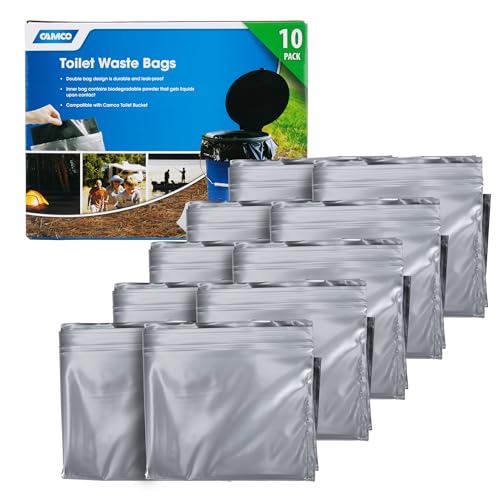
- ✓ Easy to use and dispose
- ✓ Biodegradable and eco-friendly
- ✓ Fits most standard buckets
- ✕ Slightly tight fit on larger buckets
- ✕ Limited to 10-pack
| Material | Biodegradable plastic with absorbent powder |
| Capacity | Fits most standard 5-gallon buckets |
| Number of Bags | 10-pack |
| Absorbent Powder Type | Biodegradable, quick-acting |
| Compatibility | Compatible with Camco Bucket Toilet models #41549 and #41546 |
| Usage Environment | Suitable for outdoor activities such as camping, hunting, hiking, and boating |
Imagine opening a bucket after a long day of hiking and discovering a bag that instantly neutralizes odors and transforms liquid waste into a solid. That was my surprise with the Camco Toilet Waste Bags—way easier than I expected to use in the wild.
These bags fit snugly over most standard 5-gallon buckets, and the biodegradable powder inside activates quickly. As I poured in some water, I could see it turn from liquid to a firm, manageable lump in seconds—no mess, no fuss.
The bags are surprisingly sturdy and leak-proof, even when handling liquids. The non-hazardous powder is a game-changer—no unpleasant spills, and cleanup feels almost effortless.
Plus, they pair perfectly with Camco’s bucket toilet setups, making outdoor sanitation feel a lot less like a chore.
What I really liked is how light and portable the pack is—just toss it in your gear, and you’re set for a weekend or emergency use. Removing the bag is simple: just lift, seal, and dispose of.
It’s a clean, hassle-free way to manage waste without needing to carry out bulky containers or deal with odors.
My only minor gripe is that the bags are a bit tight to fit on some larger buckets, so a snug fit is key. But overall, these biodegradable bags make outdoor bathroom needs straightforward and eco-friendly, which is a huge plus for adventure lovers.
100 Portable Camping Toilet Bags, Biodegradable, 5-8 Gallon

- ✓ Strong, leak-proof design
- ✓ Biodegradable and eco-friendly
- ✓ Fits most portable toilets
- ✕ Slightly bulky when folded
- ✕ Limited to 45-180 days breakdown
| Material | Corn plant starch (biodegradable and compostable) |
| Bag Dimensions | 27.6 inches x 23.6 inches |
| Thickness | More than 1.5 mil |
| Load Capacity | Approximately 17.63 pounds |
| Biodegradation Time | 45-180 days outdoors |
| Compatibility | Fits 5-gallon and 8-gallon portable toilets, including bucket, camping, compost, and seat-frame styles |
Forget flimsy plastic bags that tear at the worst moment—these biodegradable camping toilet bags are a game-changer. The moment you unfold one, you notice how sturdy and thick it feels, thanks to the upgraded 1.5 mil thickened design.
It’s surprisingly lightweight, yet strong enough to handle a good load without any leaks or messes.
What really stands out is how easily they fit most 5 to 8-gallon portable toilets. I tested them with both bucket and seat-style toilets, and they stretched just enough to cover everything comfortably.
The octagonal bottom keeps the bag steady and prevents spills, even when the contents shift.
Handling waste outdoors can be awkward, but these bags make cleanup simple. They’re opaque, so no one has to see what’s inside, which is a nice privacy touch.
Plus, they fold down small enough to tuck into your pack or glove compartment—perfect for camping, road trips, or emergency use.
And I love that they’re biodegradable—made from corn starch, they break down in 45-180 days, leaving no pollution behind. It’s reassuring to know you’re doing your part for the environment, even when nature calls in a less-than-ideal setting.
The load capacity of about 17.63 pounds means they can handle even bulkier waste without a hitch.
Overall, these bags feel like a thoughtful, practical upgrade over traditional waste bags. They’re tough, portable, and eco-friendly—covering all the bases for outdoor and indoor use.
Just keep in mind, the size is perfect for most setups, but if your toilet is unusually large, check the dimensions first.
Why Are Biodegradable Bags Essential for Bucket Toilets?
Biodegradable bags are essential for bucket toilets because they offer an environmentally friendly solution for waste disposal, reducing the harmful impact of plastic waste on the environment.
According to a study by the Environmental Protection Agency (EPA), traditional plastic bags can take up to 1,000 years to decompose, contributing significantly to landfills and ocean pollution. In contrast, biodegradable bags are designed to break down more quickly and safely, often within months in a composting environment, thus minimizing their ecological footprint (EPA, 2021).
The underlying mechanism involves the materials used in biodegradable bags, which are typically made from plant-based sources like corn starch or polyactic acid (PLA). These materials are engineered to decompose through natural processes involving microorganisms, which can metabolize the organic matter. When used in bucket toilets, these bags allow for easier handling of human waste and promote sanitation while ensuring that the bags do not persist in the environment like conventional plastic.
Furthermore, using biodegradable bags in bucket toilets can facilitate improved hygiene and reduce odors. As waste decomposes naturally within these bags, it can help in the breakdown of pathogens, thereby minimizing health risks often associated with improper waste disposal. This is particularly crucial in areas lacking proper waste management systems, where the use of biodegradable bags can contribute to a more sustainable and healthier community.
What Environmental Impact Do Biodegradable Bags Have Compared to Traditional Bags?
| Aspect | Biodegradable Bags | Traditional Bags |
|---|---|---|
| Material Composition | Made from plant-based materials, often corn starch or sugarcane, which are renewable resources. | Typically made from petroleum-based plastics, which are non-renewable and contribute to pollution. |
| Decomposition Time | Break down in a composting environment within 3-6 months; may take longer in landfills. | Can take hundreds of years to decompose, leading to long-term environmental damage. |
| Impact on Wildlife | Less harmful if ingested; breaks down into non-toxic components. | Can be harmful to wildlife if ingested, causing injury or death. |
| Carbon Footprint | Lower carbon emissions during production and disposal, contributing to reduced greenhouse gases. | Higher carbon emissions due to fossil fuel extraction and processing. |
| Biodegradability in Different Environments | Break down effectively in compost environments; may not decompose efficiently in landfills or marine environments. | Do not biodegrade; contribute to microplastic pollution in marine environments. |
| Chemical Leaching | Generally considered non-toxic; unlikely to leach harmful substances. | Can leach harmful chemicals into soil and waterways. |
| Recycling Options | Limited recycling options; composting is preferred. | Widely recyclable but often not accepted in curbside recycling programs. |
| Economic Cost Comparison | Typically more expensive to produce and purchase. | Generally cheaper to produce and purchase. |
What Features Should You Seek in Biodegradable Bags for Bucket Toilets?
When looking for the best biodegradable bags for bucket toilets, certain features are essential to ensure functionality and environmental safety.
- Material Composition: Look for bags made from plant-based materials like cornstarch or other biodegradable substances that break down naturally in composting conditions. These materials not only provide strength and durability but also ensure that they do not release harmful chemicals into the environment as they decompose.
- Thickness and Durability: Choose bags that are thick enough to prevent tearing and leaking, which is crucial for maintaining hygiene and preventing spills. A good thickness usually ranges from 1.0 to 2.0 mils, providing the necessary strength while still being environmentally friendly.
- Size Compatibility: Ensure the bags fit the specific dimensions of your bucket toilet. Properly sized bags will facilitate easy placement and removal, minimizing mess and ensuring maximum containment of waste.
- Composting Certification: Look for bags that are certified compostable by reputable organizations, such as the Biodegradable Products Institute (BPI). This certification guarantees that the bags meet specific standards for breaking down in composting facilities, thus ensuring they are truly eco-friendly.
- Odor Control Features: Some biodegradable bags come with added features for odor control, which can be particularly important in bucket toilet applications. These may include activated charcoal layers or other natural odor-absorbing materials that help keep unpleasant smells at bay.
- Ease of Use: Consider bags that are designed for easy handling, such as those with drawstrings or handles. This feature allows for simple sealing and disposal of the contents, making the process cleaner and more convenient.
- Eco-Friendly Certifications: In addition to compostability, look for bags that may have additional eco-labels confirming their sustainability, such as being made from recycled materials or having low carbon footprints. This ensures that your choice contributes positively to the environment beyond just being biodegradable.
Are There Specific Materials That Make Biodegradable Bags More Effective?
Several materials contribute to the effectiveness of biodegradable bags, particularly for use in bucket toilets:
- PLA (Polylactic Acid): PLA is a biodegradable thermoplastic derived from renewable resources such as corn starch or sugarcane. It decomposes in industrial composting facilities within a few months and is effective for holding waste without leaking.
- PVA (Polyvinyl Alcohol): PVA is a water-soluble synthetic polymer that is biodegradable in water and can break down in a composting environment. It is particularly useful for applications where bags need to dissolve in water, making it ideal for bucket toilets that may require easy disposal in liquid.
- Starch-based polymers: These biodegradable bags are made from natural starches and can break down in composting conditions, usually within 90 days. They are effective for containing solid waste and are often mixed with other biodegradable materials to enhance their strength and durability.
- Compostable additives: Some biodegradable bags incorporate additives that accelerate the degradation process. These additives help the bags break down more quickly in composting environments, ensuring that they do not persist in landfills and can contribute to soil health.
- Recycled paper fibers: Bags made from recycled paper are also a sustainable option, as they are biodegradable and can break down in compost. They are particularly effective for absorbent purposes and can help control odors when used in bucket toilets.
How Do Various Sizes of Biodegradable Bags Fit in Different Bucket Toilets?
The best biodegradable bags for bucket toilets come in various sizes to accommodate different bucket dimensions and usage needs.
- Small bags (3-5 gallons): These bags are typically designed for compact bucket toilets used in small spaces like RVs or camping situations.
- Medium bags (5-8 gallons): This size is ideal for standard household bucket toilets, providing a balance between capacity and ease of handling.
- Large bags (8-10 gallons): Larger bags are suitable for heavy-duty use, often used in commercial settings or during events where higher waste volume is expected.
- Custom-sized bags: Some brands offer customizable options to fit unique bucket dimensions, ensuring no leaks or overflow.
Small biodegradable bags, typically ranging from 3 to 5 gallons, are perfect for tight spaces and portable toilets, making them a favorite among campers and travelers. They are lightweight, easy to store, and designed to break down quickly in composting environments.
Medium bags, usually between 5 to 8 gallons, cater to the needs of most standard bucket toilets found in homes and recreational vehicles. Their larger capacity allows for extended use without frequent changes, while still being manageable for disposal.
Large biodegradable bags, which can hold 8 to 10 gallons, are best suited for high-traffic areas or situations where multiple users are expected. They are designed for increased durability and can handle more waste, reducing the frequency of bag changes and enhancing convenience.
Custom-sized biodegradable bags provide a tailored fit for unique bucket designs, ensuring optimal performance without risk of leaks. These bags are particularly useful for specialized applications, allowing users to maintain hygiene and efficiency in waste disposal.
Which Brands Offer the Best Biodegradable Bags for Bucket Toilets?
The best biodegradable bags for bucket toilets come from several reputable brands known for their eco-friendly products.
- BioBag: BioBag is a well-known brand that specializes in compostable bags made from plant-based materials. Their bags are designed to break down quickly in composting environments, making them a great choice for bucket toilets as they help reduce environmental impact.
- Earth Rated: Earth Rated produces high-quality biodegradable waste bags that are thick and leak-proof. Their bags are made with a focus on sustainability and are certified compostable, ensuring they decompose without leaving harmful residues.
- Green Elephant: Green Elephant offers a range of biodegradable bags that are specifically designed for use in bucket toilets and composting systems. These bags are durable and suitable for various uses, providing an eco-conscious alternative to traditional plastic bags.
- RePack: RePack focuses on reusable and biodegradable packaging solutions. Their biodegradable bags are designed to decompose naturally, making them suitable for bucket toilets while also promoting a circular economy approach to waste management.
- Eco-Products: Eco-Products provides a variety of eco-friendly disposables, including biodegradable bags for toilets. Their products are made from renewable resources and are certified compostable, ensuring they are safe for the environment.
How Should You Dispose of Biodegradable Bags Used in Bucket Toilets?
When disposing of biodegradable bags used in bucket toilets, it’s crucial to follow environmentally friendly practices to ensure proper decomposition.
- Composting: If the biodegradable bags are certified compostable, they can be added to a home composting system. These bags break down into organic matter, enriching the soil and supporting plant growth.
- Green Waste Collection: Some municipalities offer green waste collection services that accept biodegradable materials. By placing the bags in these designated bins, you are ensuring they will be processed correctly and contribute to the production of compost.
- Landfill Disposal: If composting or green waste options are not available, the biodegradable bags can be disposed of in the landfill. While this is not the most eco-friendly option, biodegradable bags typically break down faster than conventional plastic in a landfill environment.
- Burning (with caution): In some cases, biodegradable bags can be burned to reduce waste volume. However, this should only be done if local regulations permit burning, as it may release harmful emissions if not done properly.
- Check Local Regulations: Always consult local waste disposal regulations, as guidelines for biodegradable materials may vary by location. Understanding local laws ensures that you are disposing of materials in a way that aligns with community practices.