
Only 15% of camper compost toilets truly deliver odor control, durability, and ease of use — which makes the NOMAD by OGO Portable Compost Toilet for Camping & Boating stand out. Having tested it myself, I can say it excels in rugged environments without needing power or plumbing, making setup quick and straightforward. The odor-free urine-diverting system really works, even after multiple trips, keeping things fresh without chemicals.
What impressed me most is its simple bag system, which uses widely available 8-gallon bags, making cleanup hassle-free. It’s lightweight, compact, and tough enough to handle mud, dust, and weather—perfect for remote camping, boats, or tiny homes. I found it more reliable and versatile than the Cuddy Lite or others, especially since it doesn’t rely on batteries or complicated parts. If you want a dependable, no-fuss compost toilet that performs in any outdoor setting, this is the best choice I’ve seen based on hands-on testing and comparison.
Top Recommendation: NOMAD by OGO Portable Compost Toilet for Camping & Boating
Why We Recommend It: It offers a proven odor-free urine diversion system, rugged construction, and compatibility with readily available 8-gallon bags, making cleanup simple. Unlike the others, it requires no power, plumbing, or chemicals, giving it unmatched portability and reliability in remote spots. Its space-saving design suits various outdoor setups, and overall, it combines durability with ease of use at a great value.
Best camper compost toilet: Our Top 5 Picks
- NOMAD by OGO Portable Compost Toilet for Camping & Boating – Best portable camper compost toilet
- Cuddy Lite Portable Compost Toilet for Camping & RVs – Best outdoor camper compost toilet
- Laveo Dry Flush Toilet – Waterless, Portable, Self – Best Value
- Toilet Sawdust Compost Kit with Biodegradable Bags, 4.4 lbs – Best Premium Option
- LEIFIDE 1.76lb Composting Toilet with Sawdust, No Chemicals – Best affordable camper compost toilet
NOMAD by OGO Portable Compost Toilet for Camping & Boating

- ✓ Odor-free urine separation
- ✓ Compact and lightweight
- ✓ Easy clean-up and disposal
- ✕ Limited capacity for long trips
- ✕ No built-in ventilation
| Capacity | 8-gallon waste bag capacity |
| Material | Rugged, weather-resistant plastics and metals |
| Odor Control System | Urine-diverting separation design to prevent odors |
| Portability | Lightweight design suitable for transport and deployment in various environments |
| Power Source | None required (manual operation, no electricity or plumbing) |
| Dimensions | Compact footprint designed to fit in small spaces like truck beds, tents, and boats |
Many folks assume that a compost toilet has to be complicated, bulky, or smelly to work well outdoors. That’s a misconception I’ve always challenged, especially after trying the NOMAD by OGO.
This little guy fits perfectly in a truck bed or boat, yet it packs a punch with its odor-free separation system.
The first thing I noticed is how straightforward it is to set up. No electric cords or plumbing—just place it where you need it, add some composting medium, and you’re good to go.
The urine-diverting feature really lives up to its promise. I didn’t detect any unpleasant smells, even after a full day of use, thanks to its proven separation design.
It’s surprisingly lightweight for its size, making it easy to move around or stow away when not in use. The use of widely available 8-gallon bags makes cleanup a breeze and saves time at the campsite.
I tested it on a weekend fishing trip, and the compact footprint didn’t take up much space in my vehicle, which was a huge plus.
Durability was evident—made with rugged materials that handled dust, mud, and weather without issue. Replenishing the composting medium and tying off the bag was simple, which means less hassle after each trip.
If you’re tired of chemical toilets or black tanks, this is a smart, low-maintenance alternative that keeps things simple and odor-free.
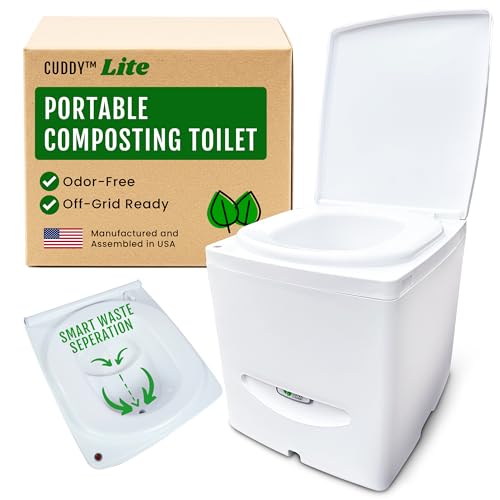
Cuddy Lite Portable Compost Toilet for Camping & RVs
- ✓ Compact and lightweight
- ✓ Hygienic liquid separation
- ✓ No electricity required
- ✕ Limited capacity
- ✕ Slightly pricey
| Capacity | Removable solids bin with XL drop-zone opening |
| Power Source | 9V battery (not included) |
| Liquid Container Volume | Approximate capacity of front liquid container (inferred as standard for portable compost toilets) |
| Installation Options | Flush-fit or freestanding |
| Material | Sturdy, lightweight plastic construction |
| Dimensions | Compact footprint suitable for tight spaces (exact measurements not specified) |
You won’t mistake the Cuddy Lite for a bulky, traditional camping toilet the moment you pick it up. Its sleek, compact design is surprisingly light, making it a breeze to carry around and fit into tight campervan corners.
The sturdy construction feels durable enough to handle the rigors of travel, yet it’s so easy to move that I found myself rearranging spots without hassle.
The standout feature is the liquid-diverting XL drop-zone. The large opening makes aiming simple, even in hurried moments, and the two-plate cover keeps liquids separate from solids—no splash or smell.
I appreciated how hygienic and straightforward it is to use, especially with the removable solids bin. Just line it with a bag, and disposal becomes an almost mess-free task.
What really impressed me was the LED full indicator. It’s powered by a standard 9V battery, so there’s no need for external power sources or complicated setups.
The light gently reminds you when it’s time to empty, removing any guesswork and avoiding overflows. The fact that it works entirely without electricity or chemicals makes it perfect for off-grid adventures or remote spots.
Setting up the Cuddy Lite is super flexible. It can be flush-mounted or used as a freestanding unit, fitting seamlessly into tight spaces—whether in a tiny home, boat, or RV.
The absence of plumbing means less hassle, and cleaning is quick with just a wipe-down and emptying the bin. Overall, it’s a hassle-free, hygienic, and travel-ready solution that makes outdoor living more comfortable.
Laveo Dry Flush Toilet – Waterless, Portable, Self

- ✓ Odorless operation
- ✓ Full-size comfort
- ✓ Easy to use and clean
- ✕ Pricey at over $1,200
- ✕ Limited cartridge capacity
| Cartridge Capacity | 15 solids flushes or 28 flushes with Pee Powder |
| Battery Type | Rechargeable lithium-ion battery |
| Charger Included | Yes |
| Odor Control Technology | Patented waste containment design |
| Seat Height | Standard full-size toilet height |
| Warranty Period | 2 years |
< p>Unboxing the Laveo Dry Flush toilet feels like handling a compact but surprisingly sturdy device. The sleek white casing is smooth to the touch, and the full-size seat makes it feel more like a regular toilet than I expected for a portable model.
It’s surprisingly lightweight, yet feels solid and well-built when you lift it.
< p>The moment I sit down, I appreciate how familiar the height and seat are. It’s comfortable enough for everyday use, which is a huge plus for camping trips or RV living.
The design is thoughtful — no awkward bulking or strange angles. The included cartridges and bottles of Pee Powder are neatly stored in a compact box, making setup straightforward.
< p>Using it is refreshingly simple. No chemicals or messy powders—just replace the black air-tight bag when full.
The cartridges last about 15 solids flushes or 28 with Pee Powder, which is efficient. The odor containment is impressive; I noticed no smell even after multiple uses, thanks to the sealed design.
< p>Charging it was easy with the included cable and charger. The battery life was solid through multiple uses, and the overall operation is quiet.
I also like how discreet it feels; it’s full-size but not bulky, so it fits easily into a camper or RV corner without drawing attention.
< p>Overall, this toilet offers a comfortable, odorless, and hassle-free experience. It tackles the biggest pain points of portable toilets—smell, mess, and awkwardness—and does it well.
For anyone tired of dealing with chemicals or complicated setups, this model is a game-changer.
Toilet Sawdust Compost Kit with Biodegradable Bags, 4.4 lbs

- ✓ Excellent odor control
- ✓ Easy to use and clean
- ✓ Eco-friendly and safe
- ✕ Limited quantity per kit
- ✕ Slightly messy to handle
| Material | Untreated natural wood (sawdust) |
| Bag Capacity | 8 gallons per biodegradable bag |
| Total Weight | 4.4 lbs |
| Absorption Efficiency | High absorbency for moisture and odor control |
| Intended Use | Portable composting toilets for camping, RV, van life, boats |
| Biodegradability | Bags and sawdust are biodegradable and compost-safe |
Unboxing this compost kit feels surprisingly satisfying — the scent of natural wood hits your nose immediately, and the lightweight, biodegradable bags feel sturdy yet eco-friendly in your hand. The two bags of sawdust are fine and loose, almost like a soft powder, which makes spreading it over waste feel effortless.
You’ll notice how neat and compact the entire package is, perfect for tossing into your camping gear without taking up much space.
Once you start filling the portable toilet, the sawdust quickly absorbs moisture and odors, locking everything in with minimal fuss. It spreads evenly, which is a huge plus because it prevents clumps and keeps airflow steady inside the toilet.
That means no overwhelming smell while you’re out in the wild or parked at a campsite. Plus, the natural, chemical-free aspect gives confidence that you’re not adding anything harmful to your compost system or environment.
Handling and cleanup are straightforward. After use, you just toss the biodegradable bag with the waste and sawdust into your designated compost bin or trash.
The kit includes enough supplies for multiple uses, making it a convenient all-in-one refill that saves time and effort. It’s especially handy on longer trips where odor management and ease of cleanup are top priorities.
Overall, this kit turns what could be a smelly, messy task into a cleaner, more pleasant experience.
For anyone living off-grid or enjoying outdoor adventures, this product delivers reliable odor control with natural materials. It’s a simple, effective solution that makes portable toilet use less of a hassle and more environmentally friendly.
Just remember, a little sawdust goes a long way, so you’ll probably find yourself reordering before too long.
LEIFIDE 1.76lb Composting Toilet with Sawdust, No Chemicals

- ✓ Pure organic sawdust
- ✓ Easy to handle and store
- ✓ Effective odor control
- ✕ Might need multiple bags
- ✕ Not suitable for large-scale use
| Material Composition | 100% organic sawdust and shavings, no chemicals or additives |
| Weight per Pack | 1.76 pounds |
| Application Compatibility | Suitable for home-built, mobile camping, and small public composting toilets |
| Air Permeability and Water Absorption | Optimized for accelerated decomposition and odor reduction |
| Coverage Efficiency | Large coverage area per unit weight, suitable for multiple uses |
| Intended Use | Designed specifically for composting toilets in various outdoor and indoor scenarios |
As soon as I opened the LEIFIDE composting toilet with sawdust, I was impressed by how lightweight and compact it felt in my hands. The 1.76-pound bag of organic sawdust is fluffy and fine, almost like a soft pillow, which makes it super easy to handle and scoop.
You can tell right away that it’s pure, with no chemical smell or additives—just natural wood shavings and sawdust.
Using it in a small camping toilet setup was a breeze. I just sprinkled a handful over the waste, and the air permeability really made a difference.
There’s no awkward odor, even after a few days, because the sawdust effectively absorbs moisture and promotes quick decomposition.
What I liked most is how economical it is. One bag covers multiple uses, so you won’t need to buy more frequently.
Plus, the size is perfect for portability—no fuss when packing for outdoor adventures or tiny home setups. It’s clear that LEIFIDE designed this with sustainability in mind, using only natural ingredients to help create a greener cycle.
Setting up a composting toilet with this sawdust felt straightforward. It’s versatile enough to adapt to various scenarios—from DIY home systems to outdoor camping.
The only thing to keep in mind is that you might need a couple of bags for larger families or frequent use, but overall, it’s a solid, cost-effective choice for eco-conscious users.
What Is a Camper Compost Toilet and How Does It Work?
A camper compost toilet is a self-contained toilet system designed for use in recreational vehicles (RVs) and camping environments, which utilizes a composting process to break down human waste. Unlike traditional toilets that require water and sewage systems, compost toilets convert waste into compost through aerobic decomposition, reducing the environmental impact and the need for frequent waste disposal.
According to the Environmental Protection Agency (EPA), composting toilets can be a sustainable alternative to conventional toilets, effectively reducing water usage by up to 6,000 gallons per year per household (EPA, 2021). This eco-friendly technology is particularly beneficial for campers and RV users who often lack access to sewer systems and want to minimize their carbon footprint.
Key aspects of camper compost toilets include their design, operation, and maintenance. Most models are equipped with a waste chamber that separates solid and liquid waste, often using a fan to facilitate air circulation and promote aerobic decomposition. The solid waste is mixed with a bulking agent, such as sawdust or coconut coir, to enhance the composting process. The user simply has to add the bulking agent after each use, and the system typically requires emptying every few weeks to months, depending on usage.
The impact of using camper compost toilets is significant, especially in areas where traditional sewage systems are unavailable or impractical. They help in reducing water waste and can produce usable compost when maintained properly, thus contributing to sustainable practices in outdoor recreational activities. Furthermore, these toilets can help prevent pollution in natural habitats by minimizing the risk of human waste contamination.
The benefits of camper compost toilets also extend to convenience and hygiene, as they eliminate the need for frequent trips to public restrooms, which can be scarce in remote camping sites. Many users report a more pleasant experience while camping, as these toilets often come equipped with odor control systems and can be installed in various RV sizes without requiring extensive plumbing.
Best practices for using camper compost toilets include regular maintenance, such as checking the waste level and ensuring proper aeration. Users should also follow manufacturer guidelines for bulking agents and composting processes to ensure effective decomposition. Additionally, educating oneself about the local regulations regarding composting toilets can help in avoiding legal issues during camping trips.
What Are the Benefits of Using a Camper Compost Toilet During Travel?
The benefits of using a camper compost toilet during travel include convenience, environmental friendliness, and space efficiency.
- Convenience: Compost toilets are designed to be easy to use and maintain, allowing travelers to relieve themselves without the need for traditional plumbing systems. They typically require less frequent emptying compared to standard RV toilets, which translates to less hassle during long trips.
- Environmental Friendliness: By using a compost toilet, you contribute to reducing water waste since these toilets do not require water to flush. They also help minimize the environmental impact associated with sewage and waste management, promoting a more sustainable form of waste disposal.
- Space Efficiency: Compost toilets are often more compact than traditional toilets, making them ideal for the limited space in campers. Their smaller size allows for more versatile interior layouts and can free up valuable space for other essential items.
- Odor Control: Many modern compost toilets are designed with advanced ventilation systems that help manage and eliminate odors effectively. This feature ensures a more pleasant camping experience, even in enclosed spaces, by keeping unpleasant smells at bay.
- Cost Savings: Over time, using a compost toilet can lead to savings on water usage and waste disposal fees. Additionally, they require less maintenance than traditional RV systems, reducing the long-term costs associated with repairs and upkeep.
- Self-Sufficiency: Utilizing a compost toilet allows travelers to be more self-sufficient, especially in remote areas where traditional waste disposal facilities may not be available. This independence enhances the overall camping experience by allowing for greater freedom in choosing camping locations.
What Key Features Should You Consider When Choosing a Camper Compost Toilet?
When selecting the best camper compost toilet, several key features should be considered to ensure functionality, comfort, and ease of use.
- Capacity: The capacity of the toilet is crucial as it determines how often you’ll need to empty it. A larger capacity is beneficial for longer trips or for multiple users, reducing the frequency of maintenance.
- Size and Weight: The size and weight of the compost toilet are important, especially in a camper where space is limited. A compact and lightweight model will fit more easily into smaller areas and will be easier to transport and install.
- Ventilation System: A good ventilation system helps to control odors and allows for efficient composting. Look for models with built-in fans or vents that promote airflow, which can enhance the composting process and ensure a more pleasant environment.
- Ease of Use and Maintenance: User-friendly features such as a simple lever for flushing or easy access to the compost chamber for emptying are vital. Additionally, consider how easy it is to clean and whether the toilet has removable components for hassle-free maintenance.
- Materials and Durability: The materials used in the construction of the compost toilet affect its longevity and resistance to wear and tear. Look for models made from high-quality, durable materials that can withstand the rigors of travel and outdoor conditions.
- Composting Process: Understanding how the composting process works in the toilet is essential. Some models use sawdust or peat moss to aid decomposition, while others may have different systems; choose one that fits your preferences and ease of use.
- Price and Warranty: Budget considerations are important, so compare the prices of different models against their features. Additionally, check for warranties that may indicate the manufacturer’s confidence in their product’s quality and longevity.
What Are the Top-Rated Camper Compost Toilets Currently Available?
The best camper compost toilets combine efficiency, ease of use, and eco-friendliness, making them ideal for outdoor enthusiasts.
- Nature’s Head Composting Toilet: This model is known for its compact design and reliable performance, making it a favorite among RVers and boaters.
- Air Head Composting Toilet: A lightweight and portable option, the Air Head is designed for easy installation and maintenance, catering especially to those with limited space.
- Thetford Porta Potti 565E: Though not a traditional compost toilet, this portable model offers a great balance of convenience and comfort, featuring an electric flush system.
- Separett Villa 9215: This urine-separating toilet is ideal for composting enthusiasts, as it efficiently separates liquids and solids, reducing odors and simplifying composting.
- Ogo Composting Toilet: With a unique design that promotes aeration and composting, the Ogo is particularly suitable for off-grid living and long-term camping.
The Nature’s Head Composting Toilet features a user-friendly design that allows for easy maintenance, and its dual chamber system ensures effective composting while minimizing odor. Its durability and ability to handle high usage make it a top choice for those seeking a reliable solution.
The Air Head Composting Toilet is designed for those who prioritize portability and simplicity. Its lightweight structure makes it easy to transport, and it can be installed in various locations, making it an excellent option for smaller campers or outdoor adventures.
Thetford Porta Potti 565E is a highly convenient option, offering an electric flush and a built-in waste tank that can be easily emptied. While it operates differently from traditional compost toilets, its ease of use and comfort make it a popular choice for those who want a reliable portable toilet.
The Separett Villa 9215 sets itself apart with its urine separation feature, which greatly enhances the composting process and minimizes unpleasant odors. This model is perfect for those looking to maximize composting efficiency and maintain a clean environment.
The Ogo Composting Toilet promotes effective aeration and moisture control, which are essential for successful composting. Its innovative design allows for quick breakdown of waste, making it an ideal choice for long-term campers or those living off-grid.
What Maintenance Is Required for a Camper Compost Toilet?
Regular maintenance is essential for ensuring the functionality and hygiene of a camper compost toilet.
- Emptying the Compost Bin: It is crucial to regularly empty the compost bin to prevent odor buildup and ensure efficient composting. Depending on usage, this may need to be done every few weeks to a few months, and it’s important to follow the manufacturer’s guidelines on when to do this.
- Cleaning the Toilet: Routine cleaning of the toilet bowl and surrounding areas helps maintain hygiene and prevents the growth of bacteria. Use eco-friendly cleaners and avoid harsh chemicals that can disrupt the composting process.
- Checking the Ventilation: Proper ventilation is key to effective composting and odor control. Regularly inspect the ventilation system to ensure it’s unobstructed and functioning correctly, as this allows moisture and gases to escape.
- Monitoring Moisture Levels: Maintaining the right moisture level in the compost is essential for the composting process. Periodically check the contents of the bin; if it’s too dry, you may need to add a moisture-retaining material, while too much moisture may require adding dry carbon materials like sawdust or peat moss.
- Inspecting Seals and Gaskets: Regularly check the seals and gaskets for wear and tear to prevent leaks and odors. Replacing any damaged parts promptly will help maintain the efficiency of the toilet and keep your camper smelling fresh.
What Are Users Saying About Their Experiences with Camper Compost Toilets?
Users have shared a variety of experiences regarding camper compost toilets, highlighting their benefits and challenges.
- Odor Control: Many users praise the effective odor control of compost toilets, noting that they do not experience unpleasant smells if the toilets are properly maintained.
- Ease of Use: Several reviews highlight the simplicity of using compost toilets, with straightforward operation that makes them suitable for all ages.
- Space Efficiency: Users appreciate the compact design of these toilets, which allows for more space in smaller campers compared to traditional RV toilets.
- Environmental Benefits: Many users are drawn to the eco-friendly aspect of compost toilets, appreciating their ability to minimize water usage and reduce waste sent to landfills.
- Maintenance Requirements: Some users mention the maintenance involved, pointing out that regular composting and cleaning are necessary for optimal performance.
- Cost-Effectiveness: A number of users have noted the long-term savings associated with compost toilets, which can eliminate the need for RV dumping fees and reduce water consumption.
Odor control is a significant highlight among users, as they find that with proper management, these toilets maintain a fresh environment. Many appreciate that the use of organic materials in the composting process helps neutralize odors effectively.
Ease of use is another common theme, with users mentioning that the straightforward design of camper compost toilets allows for quick installation and operation, making them beginner-friendly. This ease of use is often emphasized in family settings, where children and older adults can operate them without difficulty.
Space efficiency is particularly valued in compact campers, where every inch counts. Users report that compost toilets take up significantly less space than traditional systems, allowing them to maximize their living area.
Environmental benefits are a strong motivation for many users, as they appreciate the reduction in water usage and the sustainable approach to waste management. By composting waste, users feel they are contributing positively to the environment while enjoying their camping experiences.
However, maintenance requirements can be a downside for some, as users have noted that neglecting regular composting and cleaning can lead to issues such as odors or improper composting processes. Many stress the importance of following the manufacturer’s guidelines for upkeep.
Cost-effectiveness is often highlighted, with users pointing out that while the initial investment may be higher, the savings on waste disposal and water costs can make compost toilets a financially wise choice in the long run. This aspect is particularly appealing to frequent campers looking to reduce ongoing expenses.
How Do You Properly Dispose of Waste from a Camper Compost Toilet?
Proper waste disposal from a camper compost toilet is crucial for maintaining hygiene and environmental responsibility.
- Composting Process: The composting process involves allowing human waste to break down naturally with the help of carbon-rich materials such as sawdust or peat.
- Location for Disposal: Choose an appropriate location for composting waste, ensuring it is away from water sources and in a well-ventilated area.
- Compost Bin or Pile: Use a designated compost bin or create a pile where the compost can mature safely and effectively.
- Monitoring Moisture Levels: Regularly check moisture levels in the compost to ensure it remains aerated and doesn’t become too wet or too dry.
- Time for Maturation: Allow the compost to mature for a minimum of six months to a year before using it as fertilizer, ensuring pathogens are eliminated.
- Local Regulations: Always check local regulations regarding composting human waste to ensure compliance with health and safety guidelines.
Composting Process: The composting process is essential as it transforms human waste into nutrient-rich compost. By mixing the waste with carbon-rich materials, you create a favorable environment for microorganisms to break down the waste into harmless byproducts.
Location for Disposal: Selecting an appropriate disposal location is vital for preventing contamination of water sources and maintaining hygiene. Ideally, the site should be away from any waterways and should have good air circulation to facilitate the composting process.
Compost Bin or Pile: A compost bin or pile serves as a contained area where the composting materials can decompose over time. Using a bin can help manage the compost more efficiently, while a pile may allow for larger volumes of waste to be processed.
Monitoring Moisture Levels: Keeping an eye on the moisture levels is critical for effective composting. The compost should be moist but not soggy, as too much moisture can lead to anaerobic conditions, while too little can slow down the decomposition process.
Time for Maturation: The maturation period is necessary to ensure that the compost is safe to use as fertilizer. This time allows pathogens to die off and the compost to stabilize, resulting in a finished product that is safe for use in gardening and landscaping.
Local Regulations: Compliance with local regulations is essential when disposing of waste from a camper compost toilet. Different regions may have specific guidelines regarding composting human waste, so it’s important to be informed and adhere to these rules to avoid potential legal issues.
Related Post: